


AI infrastructure for Canadian and U.S. businesses.
Accentrust is planning unified model access and inference services for businesses in Canada and the United States. Connect Figena, Cilila AI, or your own applications to models that fit, with control over deployment, usage, and cost.
One API. Deployment choices that fit.
Model access, managed inference, and dedicated capacity, shaped around the needs of businesses in both markets.
Unified model access
A planned entry point for selected models, reducing separate integrations while making model capabilities and provider differences visible.
Managed inference
A planned service matching eligible models to approved deployments around your performance, cost, and data requirements. Model licences, capacity, and processing terms would be confirmed for each deployment.
Dedicated capacity
A future option for reserved compute and greater isolation, with capacity, performance targets, and support terms agreed for your workload.
From business requests to data and compute.
Explore the storage, compute and energy layers behind our infrastructure plans.

Data storage for business applications
Business records, documents and retrieval data, with storage location, access and recovery arrangements defined for each deployment.
Connecting business applications with models and compute.
Accentrust builds Figena, our flagship finance and business operations platform, and Cilila AI, the intelligence layer that helps teams understand context and move work forward. Our infrastructure initiative connects that application experience with model access and inference capacity for businesses in Canada and the United States. Your own applications can use the planned model service independently of Figena.
- Figena
- Cilila AI
- Your applications
Application gateway
Tenant identity · scoped keys · TLS · request limits
Policy & route selection
Model, region and budget rules · no approved route → explicit error
Data requests use storage services; model requests use an approved inference route.
Approved regional deployment
Owned or contracted capacity · agreed processing location
Data storage
- Databases & encrypted object storage
- Permission-filtered retrieval indexes
- Protected backups & restore validation
AI compute
- Inference queues & request scheduling
- GPU / CPU workers · shared or reserved pools
- Licensed model registry → serving workers
Only context selected under the application’s permissions reaches inference. Stored data is not automatically sent to models.
Facility & network foundation
Segmented networks · power & cooling · physical access controls
Authorized model providers
Selected models · verified processing regions · disclosed data terms
- Policy-checked egress · minimum necessary request content
- Response streaming · usage returned for attribution
Provider routes do not have direct access to the storage plane.
Responses return through the gateway. Saving results requires a separately authorized write to the data service.
Management & assurance
- Tenants, scoped keys & deployment policy
- Storage, compute & token metering · project attribution
- Key management, metadata audit & service monitoring
Management and telemetry cover both deployment paths. They do not provide unrestricted access to customer content.
One integration. Room to choose.
We’re designing a model API for teams working in Canada, the U.S., or across both, with consistent ways to select models, manage access, and understand use and cost.
Use familiar integrations
Our compatibility goal starts with OpenAI-style chat requests and streaming. A clear integration guide would identify validated SDKs, parameters, and limits for each supported service.
Compare the models that fit
Our planned catalogue would show model versions, context limits, processing locations, capabilities, and prices. Structured output and tool calling would be listed only where the model and endpoint support them.
Keep routing within your rules
Our routing design limits selection and fallback to models, providers, regions, and cost rules you approve. If no permitted route is available, the request should fail clearly rather than silently cross a boundary.
Control who can call
We plan application-scoped keys, separate test and production access, key rotation and revocation, and configurable usage limits and budgets.
See how requests perform
We plan request records and reporting for models, providers, tokens, response times, errors, and spend, attributed to each application or project.
Understand what you pay
Our commercial design distinguishes metered model use, platform fees, and reserved capacity. Rates, billing rules, and usage limits would be presented before you commit to a service.

Choose how and where your AI runs.
For businesses in Canada and the United States, deployment starts with your workload. Compare model capabilities, processing locations, data terms, and support arrangements to find a suitable path.
Canadian-hosted capacity
Our facility plan centers on Vancouver, Canada. Eligible, licensed models would run on approved owned or contracted capacity, with deployment terms defining the requests, outputs, logs, backups, and access covered by residency commitments.
Approved provider deployments
We are evaluating model access through authorized providers. You would explicitly select a deployment based on its supported models, processing region, and data terms, with approved fallback routes preserving the same agreed boundaries.
Customers in both countries follow the same workload-based approach. Processing regions and data commitments are confirmed per deployment before access; a customer’s address or a shared API endpoint does not establish residency.
Know where your data goes.
Compare the complete data path alongside the model, including what is retained and who can access it.
Clear processing boundaries
Our intended policy excludes customer prompts and outputs from model training. Any external provider’s processing and training terms would be disclosed for the selected route, rather than assumed to match ours.
Retention you can evaluate
We plan to distinguish request metadata from stored prompt and output content, with stated retention and deletion options. Zero-retention options would require verified support across the selected processing path.
A fit for your requirements
Match the deployment to your security and compliance requirements, with access, backups, support, and contractual commitments reviewed together. Inference, account, and billing records each have their own location and handling terms.
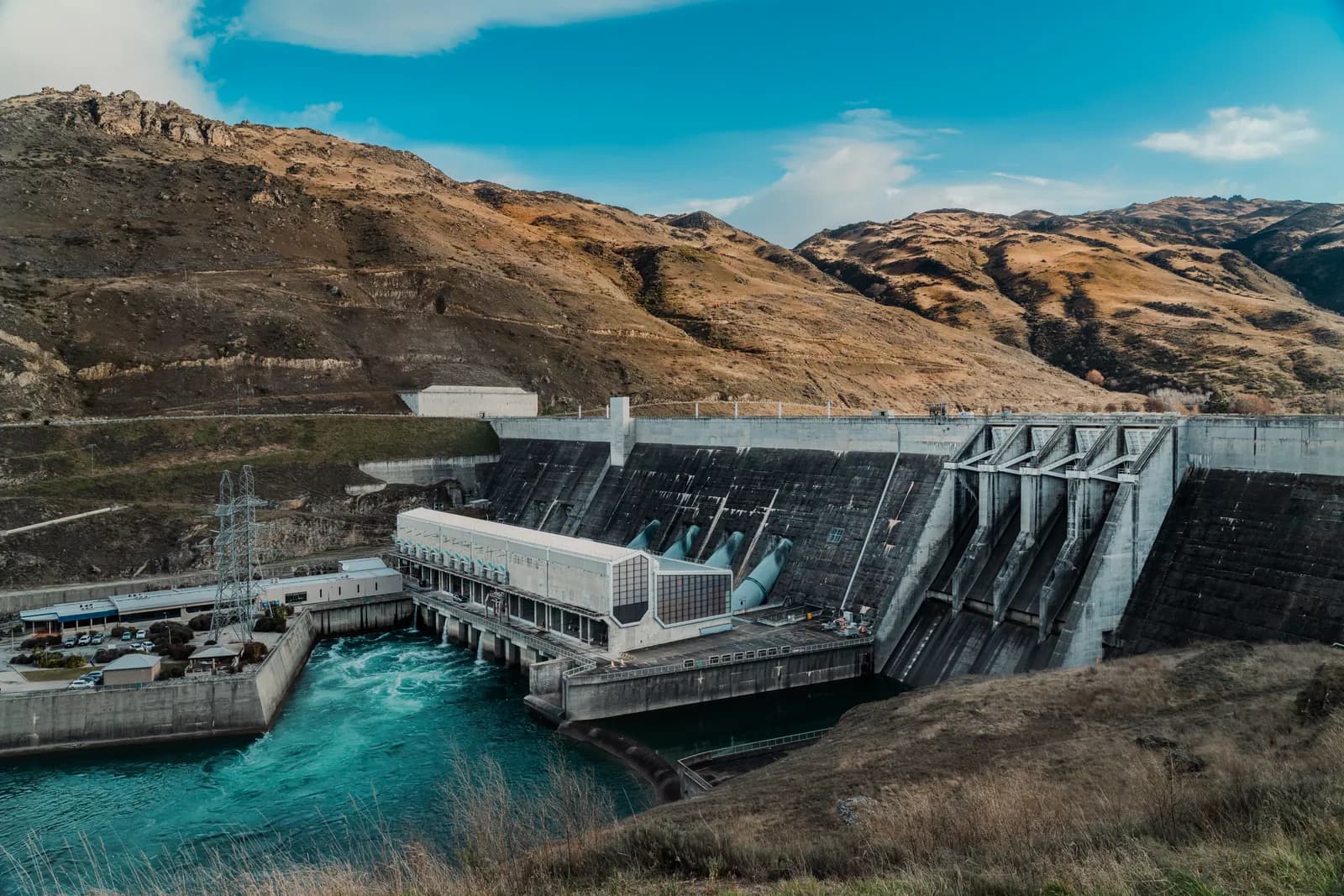
A cleaner foundation for AI.
Our facility planning prioritizes efficient operations and verifiable clean-electricity procurement, with energy claims tied to evidence you can review.
These are design and procurement goals. Facility energy use, electricity sourcing, and environmental reporting will depend on the final site and operating arrangements.
Start with the service. Expand the capacity.
We plan to validate model access and customer workloads with teams in Canada and the U.S., using approved capacity as the service and facility plans develop.
Validate access and model fit
Evaluate request compatibility, model capabilities, routing policies, usage metering, and the needs of Figena, Cilila AI, and independent API customers.
Pilot with defined service terms
Plan limited workloads with selected customers on approved owned or partner capacity, with clear limits, data terms, billing, and support arrangements.
Grow where demand supports it
Expand model choices and dedicated capacity with customer needs in both markets, guided by operating experience and confirmed capacity requirements.
The 2028–2029 target planning window concerns the initial facility. API pilots and facility development can progress in stages, with access dates and deployment locations announced separately as they are confirmed.
Questions about the plan
How are Accentrust, Figena, and Cilila AI connected?
Accentrust is the company behind Figena and Cilila AI. Figena is its flagship enterprise software product, and Cilila AI is the intelligence layer for understanding business context and helping teams move work forward. The AI infrastructure initiative is led by Accentrust, with model API access planned for your own applications as well as these products.
Are Canadian and U.S. businesses both part of the plan?
Yes. Canada and the United States are both core markets for this initiative. The same model-access and usage-control approach is planned for teams in either country and businesses working across both. Deployment location, service scope, and data terms would be agreed for each workload.
How can I explore API access?
We are planning the initial API pilots. Public API access is not open yet. Contact us with your workload to discuss model fit, deployment requirements, and a potential pilot. Access details, models, and pricing will be published as they are confirmed.
Can I use the API for my own applications?
Yes, that is the intended service model. API access is planned as a standalone offering for your applications, alongside the model services for Figena and Cilila AI. Your integrations remain subject to your authorization.
What model capabilities are in scope?
The initial focus is licensed models with validated chat and streaming using familiar OpenAI-style requests. Each model entry would identify its context limits, versions, and endpoint support for tools or structured output. Embeddings, multimodal support, and further SDK compatibility are part of the expansion assessment.
Can I choose processing in Canada or the U.S.?
Processing location is a workload requirement to match with a verified deployment and agreed terms. The initial facility plan is in Vancouver, Canada; provider deployments are evaluated by their actual region. U.S.-resident processing would require a specifically verified U.S. route before use. Terms would cover prompts, outputs, logs, backups, subprocessors, support access, and approved fallback paths.
How would pricing and limits work?
Our commercial planning covers metered access and reserved capacity. Before a pilot or agreement, you would receive model and platform charges, billing units, request and concurrency limits, and the rules for failed, retried, or cancelled requests.
Could I bring my own provider keys?
BYOK is being evaluated as an additional access option. The assessment covers provider agreements, deployment regions, data handling, usage attribution, and responsibility for charges. The supported scope would be published after validation.
How do the API and facility plans connect?
The service plan allows for approved contracted capacity and provider services while the initial facility plan progresses. Each pilot would disclose its actual infrastructure and providers. Dedicated capacity could then expand with customer demand in Canada and the United States.
What does your next AI workload need?
Whether your team operates in Canada, the United States, or across both, tell us about your applications, model needs, expected usage, budget, and processing requirements. Let’s explore a suitable access and deployment path.